

Mastering Clean Cuts: Practical Tips for Choosing Steel Wire Rope Cutters and Blades
Wire rope is a high-strength, flexible mechanical cable used across many heavy-duty industrial sectors for lifting, pulling, and structural support. Consisting of multiple steel wires stranded around a central core, it provides exceptional strength, flexibility, and resistance to fatigue in areas such as construction, mining, offshore shipping and manufacturing. This durability makes it indispensable for demanding tasks like hoisting crane loads, securing bridges, and towing heavy vessels.
To prepare wire rope for these specific applications, it must be cut to precise lengths. Industrial operators typically use a dedicated wire rope cutter, abrasive angle grinder wheels, or specialised shears. This ensures the rope ends are seized or fused, preventing fraying and maintaining structural integrity.
Why Wire Rope is So Hard To Cut
Wire rope is exceptionally difficult to cut because of its multi-layered composite structure, high-tensile material composition, and dynamic physical behaviour under pressure.
Unlike a solid metal bar, wire rope is engineered by twisting dozens of high-strength steel wires into strands, which are then wrapped around a central core. This unique design presents hundreds of individual, rounded surfaces to any cutting blade. Instead of biting into a single point, a standard blade slides off the individual wires, dispersing the cutting force across a wide area.
Furthermore, the high-carbon steel used in wire rope is intentionally manufactured to resist abrasion and structural deformation. When subjected to mechanical cutting pressure, the independent strands dynamically shift, pinch the blade, and fray outward. This movement quickly absorbs the applied energy and rapidly dulls traditional tools, requiring specialised shear-cut blades or abrasive cutters to successfully sever the rope.
Using the Correct Wire Rope Cable Cutters
Choosing the correct wire rope cutting tool is essential to prevent frayed ends and flattened strands that can compromise structural integrity in high-load applications. Common examples among purpose-built rope cutter tools used to produce clean, square cuts and keep wire rope intact include:
- Hand-operated wire rope cutters: These manual tools use overlapping blades that encircle wire cables as they close. The mechanical action shears the rope simultaneously from all sides, preventing individual strands from fraying outward or flattening. The tools produce flush finishes ready for fusing, splicing or installing fittings on wire rope of small to medium diameters up to 10mm.
- Manual hydraulic cutters: Self-contained hydraulic tools use a hand pump lever to generate hydraulic pressure. This actuates a guillotine-style steel blade through the wire strands and core, creating clean cuts with minimal physical strain. Cutting capacities range from 16mm in standard hydraulic cutters, to 50mm in rope used for extreme industrial lifting, marine towing and high-capacity anchoring.
- Ratchet-action: Designed to reduce strain when cutting thicker wire rope, ratchet cutters use a spring-loaded ratcheting mechanism to close the blades incrementally with each squeeze of the handles. Single-handed cutters provide easy operation in wires up to 16mm thick, and two-handed and specialised cutters manage wire rope averaging 30mm.
- Bench cutters: These are heavy-duty stationary tools featuring hardened alloy of steel blades with notched triangular profiles that lock rope and thicker cables in place to produce clean cuts. This is achieved with long manual handles or parallel-bar leverage mechanisms that multiply cutting force. Bench cutters can easily and quickly slice through 10mm rope, reducing strain in frequent and high-volume cutting tasks.
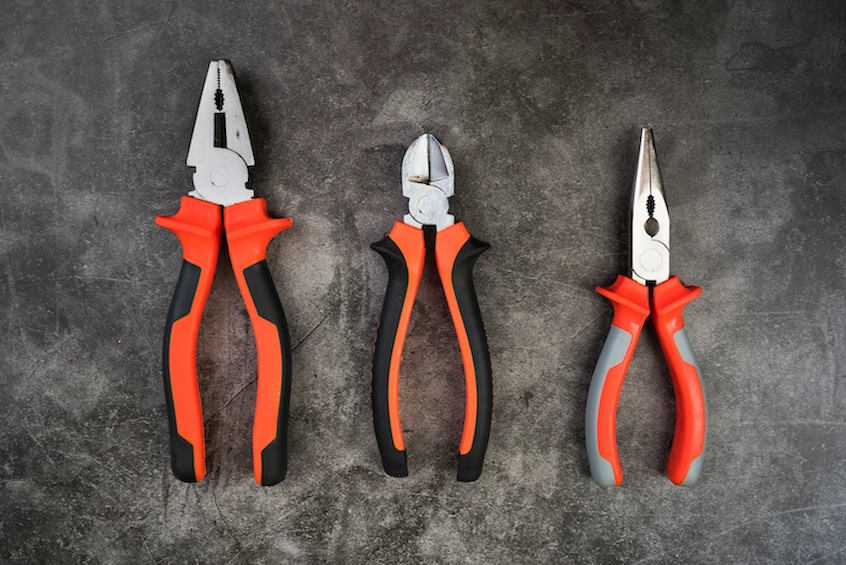
Other options are hammer-actuated impact cutting tools utilising specialised blocks and plunger hammers to cut through thicker wire rope and abrasive cut-off wheels attached to angle grinders for high-speed cutting (and generated heat for fusing). Avoid standard bolt cutters due to their crushing action that instantly frays or deforms wire strands, and standard pliers or diagonal cutters, with the same outcome.
Primary Uses and Industries
Use wire rope cutting tools to trim wire rope to desired lengths in rigging, fencing and structural supports, cutting away frayed or damaged sections in regular maintenance and repairs and the manufacture of cable assemblies, lanyards, and wire-base consumer goods. The tools see extensive use in marine and maritime applications, where they produce clean wire rope cuts in rigging, anchor lines and winches.
They’re also used in construction for cable railings, suspension bridge elements, cranes and hoisting equipment and structural tie-downs, and in aerospace applications for flight control cables, cargo tie-downs and aircraft rigging. Other industries include electrical and communications (for heavy-duty guy wires and armoured ground cables); mining, oil and gas operations for elevators, drilling rigs and dragline excavators, and for logging cables and tree stabilisation in forestry.
Choosing the Right Wire Rope Cutting Tool
When selecting the right tool for wire rope, consider key factors such as blade materials and jaw designs, overall cutting capacity and ease-of-use. Choose manual cutters with a shearing action, with blades built from hardened steel alloys such as Chrome-Vanadium to withstand wear in extreme pressure and heat. And design specifics such as triangular jaws to securely cradle multi-strand wire rope and prevent fraying.
Match the tool’s cutting capacity to the largest cable size you work with. This ensures blades remain sharp. For bench and hydraulic cutters, opt for longer handles to maximise mechanical leverage for quicker cuts with less strain. Lastly, choose features that simplify the cutting process. Look for ergonomic handles with cushioned or rubberised inserts for comfort and grip; spring-loaded handle and lever mechanisms that automatically reposition handles for the next cut, and safety locks that keep blades and cutting jaws closed during storage.
