

Protect Personnel and Premises: Invest in Reliable Chemical Storage Containers
From flammable cleaning solvents and machine lubrication products, to reacting and oxidising agents used in polymerisation and chemical bleaching, toxic and dangerous goods (DGs) are irreplaceable components in modern industrial processing. And it’s no surprise that Australia has some of the strictest guidelines on the planet regarding their usage in the workplace.
The storage and containment of these dangerous materials presents a host of challenges that are unique from all other aspects of their handling, though. Everything from the temperature they’re stored at, to their proximity to water requires careful monitoring and regulation. That’s why in addition to ensuring their operations and material handling personnel are properly trained on hazard awareness, businesses also need to invest in storage containers that help maximise their risk management.
Industrial Safety Begins With Purpose-Built Chemical Stores
Let’s be honest: while there’s no shortage of industries across the country where safety procedures are sometimes discretionary at best, businesses are broadly unanimous about the importance of proper dangerous materials storage.
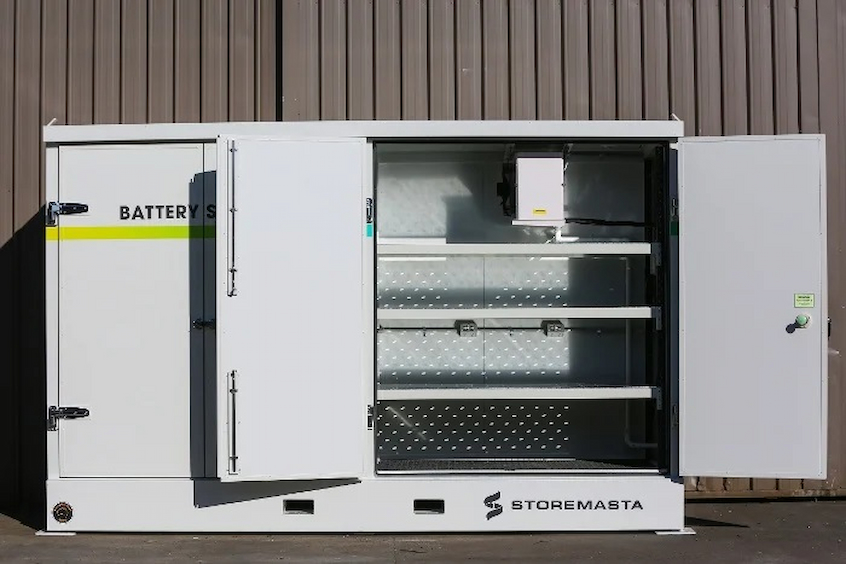
And it’s this awareness that underlines their trust in Australian-made dangerous goods chemical storage containers for the protection and accountability of their toxic processing products and agents. Unlike shipping containers converted to hazardous goods storage, purpose-built dangerous goods storage containers are designed and engineered specifically to:
- Enable maximum accountability of dangerous goods and materials from the point of acquisition;
- Safeguard against unintended spills, leaks or releases that could occur as a result of mishandling;
- Reduce the risk of dangerous chemicals being introduced into work zones that aren’t hazard area-rated;
- Prevent the possibility of incompatible goods and materials becoming commingled when not being used; and,
- Eliminate the possibility of costly theft, contamination or degradation due to misappropriation, mishandling, or exposure.
Make no mistake: while the appeal of acquiring and converting a standard shipping container to satisfy the chemical container storage role may seem attractive, the time, difficulty and cost involved in these retrofits can quickly spiral out of control. Floors need to be replaced, racking and spill containment systems installed, and doors and walls reinforced – all well in advance of compliance certification.
Purpose-built chemical storage containers for sale, however, can be manufactured in any size or for any storage contingency, with full Australian Standard (AS) compliance available immediately. And business owners only need to look at the build specs of purpose-built chemical stores to understand how much the extra up-front cost could save them on their risk assessment costs alone.
Storage Container Specs For Every DG Containment Contingency
Although regulatory guidance for the safe and efficient handling of dangerous goods and chemicals is defined by Australia’s Workplace Health & Safety (WHS) standards, the rate of occurrences and business downtime due to difficulties with hazardous substances remains high. The fact is, dangerous goods incidents can occur at any point during transport, use or storage.
That’s why specialised dangerous goods storage containers manufacturers are committed to ensuring that any risks that could be attributed to excessively stockpiled or inappropriately provisioned stores are reduced to zero. Purpose-built Australian hazardous chemical storage containers are designed to reduce both the natural and manmade risks associated with dangerous goods storage, and they boast an array of attributes and features that include:
- Cyclonic proof, heavy duty steel construction with cambered roofing for efficient rain run-off, with a choice of wind-resistant sliding, or 270° swinging doors;
- Full AS compliance, including appropriate safety and warning signage for all applicable Class 3 Flammable, Class 5 Oxidising and Organic, Class 6 Toxic and Class 8 Corrosive substances;
- Australian Dangerous Good (ADG) compliance for outdoor storage with lifting lugs, forklift channels, locating plates and earthing stakes;
- Single and multi-shelf configurations designed for safe and efficient IBC, pallet, drum, and bulk container storage, with fibreglass flooring and polyethylene sump liners for corrosion protection; and,
- ISO-17712 standard locking bar security for maximum protection against theft or unauthorised usage.
With volume capacities ranging from 250L – 12000L, and suitability for package sizes from 20L cans to 1000L IBCs, businesses can be confident that custom chemical resistant storage containers are designed for materials that could have catastrophic consequences if unintentionally released. And for chemicals and materials that are especially sensitive to Australia’s high temperature/high humidity climate, weatherproof temperature-controlled chemical storage units are also available, offering a host of enhanced specialised hazard area features that include:
- Fully contained, hazard area-rated HVAC and air ventilation systems;
- Three-phase, 415V – 480V AC power, with explosion protection built within the containment area; and,
- Non-combustable paneling and insulation, and bunded spill containment sump systems.
Ideally, with such a wide range of Australian-made, purpose-built dangerous goods containers for sale, Australian businesses that use hazardous and toxic chemicals never have to worry about in-house WHS compliance, or unwanted risks to plant property or the public. That leaves just placement and positioning as the two outstanding aspects of container chemical storage that businesses need to be mindful of.

Proper Container Placement is the Key to Maximised Risk Management
While AS and WHS compliance are crucial for establishing safe separation distances between incompatible chemicals, individual site surveys are the keys to proper DG storage container placement and positioning. Regardless of whether a storage container is purpose-built or a converted shipper, everything from its general accessibility to its location relative to water and power transmission lines has to be considered.
Ultimately, safety officers, along with facility and operations managers have to be in full accord when it comes to the placement of containers for chemical storage, and that includes attributes such as:
- Selecting a flat, stable pad or surface for the container to be installed on, with crash barriers if necessary;
- Ensuring the container is correctly placarded and sufficiently accessible by both operators and emergency personnel;
- Ensuring the container isn’t surrounded by high growing vegetation or other obstacles that could block ventilation;
- Providing sufficient distance between the container and any other possible sources of ignition, including high growing vegetation; and,
- Ensuring availability of appropriately-rated spill and clean-up materials, including personal protective equipment (PPE).
The bottom line: placement and positioning are as integral to risk management as any other aspect of AS or WHS compliance. And where necessary, businesses shouldn’t hesitate to introduce additional monitoring, security and chemical separation schedules to fully maximise their risk management profile.
The Final Word
At the end of the day, businesses that work with chemicals and other DGs have to be prepared to protect their personnel, their premises and the public from the hazards of spills and unintended releases. Compliance regulations alone aren’t enough, though. They need equipment that’s designed and built specifically for storing goods that are dangerous.
Australian-made, purpose-built dangerous goods storage containers deliver a level of customisable protection and accountability that would be impossible with converted shipping containers. They’re the right way for businesses to maximise their risk management.
